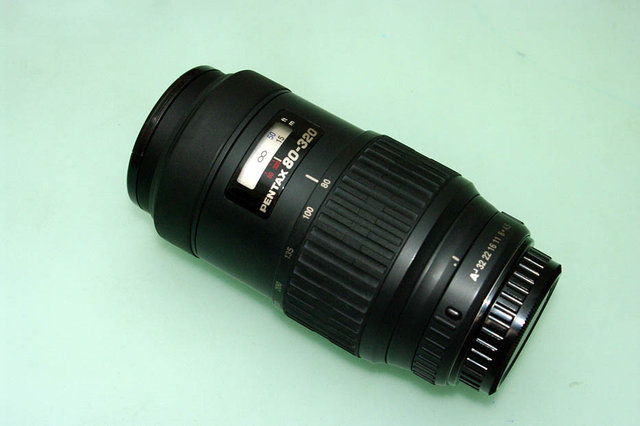
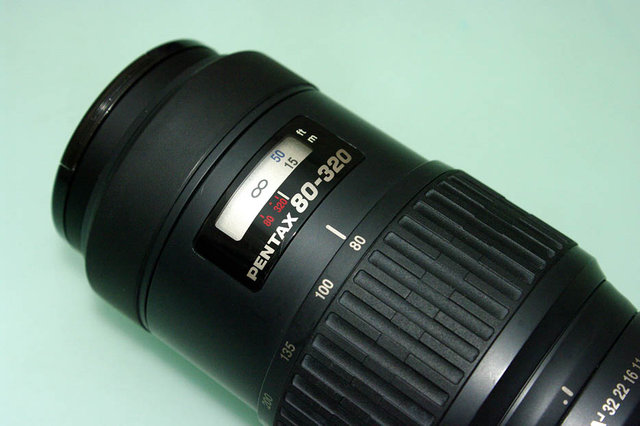
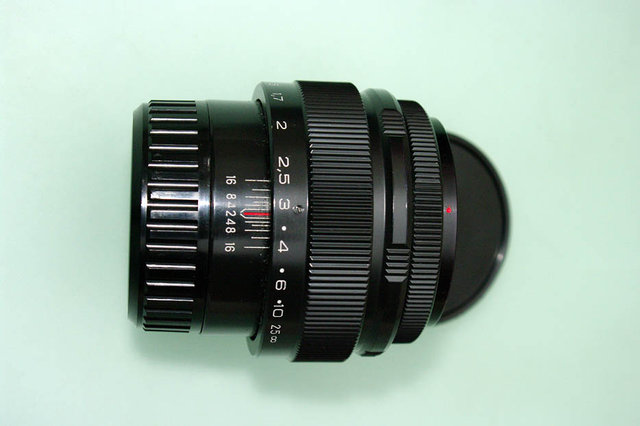
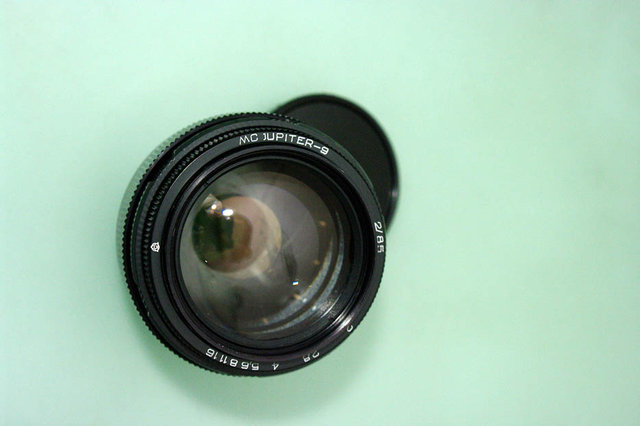
I am in the process to get the correct focus at close-up photos with my Vivitar Series 1 105mm f.2,5 macro lens. Hope I can get some interesting macro / close-up IR photos later.
Thursday, February 12, 2009
Some more IR photos with istD
Wednesday, February 11, 2009
IR photos on Pentax istD


Learnt that the CCD in the istDs lets more IR light to lass through it's IR-filter, I took our my old istD, charge the battery and do a few test shot just outside my bedroom window.
As expected, the istD has the same exposure compensation factor - in my case of 850nm filter, it needs 13-stops. Although it sounds not a big difference to the 16-stops required by my K20D, it's a big difference in actual operation. At ISO-1600, a 13-stops compensation under the winter sunlight means a ISO1600, f/8, 2s; but with 16-stops compensation means ISO1600, f/8, 16s - a quite noticeable operation difference.
On the other hand, I can't find any bandings in these istD test photos. Sounds good, but it's not conclusive yet and more test will be needed.
Sunday, February 08, 2009
Some more on IR photos
According to this Taiwan guy, he gets good result with his istDS + 720nm IR filter; and he use his DS solely for the purpose of IR photos. He is bold enough to remove the internal IR pass filter inside his DS on his own, and replace it with an 720nm IR filter....
One of the major problem with IR photos (on digital) is the ultra low sensitive and hence long exposure time even under bright sunlight. This is because the internal IR filter was used to filter most of the IR light reaching the CCD / CMOS, and left only a very small portion for exposure. If you remove the internal IR pass filter, you can get a 'normal' exposure time. (The 720nm IR filter, as the guy replaced it for the original internal IR pass filter, merely filter off visible light spectrum and make sure the photo is not 'ordinary'.
The guy also said that we need to block the VF during exposure. Maybe that's the reason I get bandings / flares in my IR photos. More test is needed. I am also planning to try using my istD for IR. Or maybe I can get a 720nm filter too...
PS. I am a clumsy DIY man, and surely I cannot manage the complicated DIY job. ;(
Friday, February 06, 2009
Banding in IR photos
The banding in the following image is not the worse one. At worst, the whole picture is not visible. However, the picture sometimes appears clean without banding..... Since it appears randomly, you cannot avoid it.
Also try the IR filter on my friend's istDs, banding is still there, but not that serious. The exposure compensation factor with IR filter for istDs is 13-stops, much better than on K20D. Maybe I should test my istD with IR.....
Infra Red photos
With digital, I though it would be easier to try IR photos, and I just get a cheapy Made-in-China IR filter to try this new area of photography.
I was wrong about "digital-is-easy" thing.
On almost all digital camera, there is a infra-red filter in front of the sensor (CMOS or CCD) because the IR gets into sensor will create unexpected color pollution to the photos. Leica M8 had made this mistake and been complained of pink-tinted white color. The IR pass filter used on the K20D is quite effective, combining with the IR filter, the ND factor is a whopping 16-stops!! I have to resort to a min ISO-1600 under bright sunlight scene.
The logistic is also quite clumsy, and reminded me of dark-room works in the old days. Here's what need to be done:
1) Use a tripod. (even at ISO1600 and bright sunlight, it takes 30s and f/8 to make a correct exposure)
2) Frame your picture WITHOUT the IR filter (the IR filter is totally dark and you can't see anything in viewfinder after you put it on)
3) Focus WITHOUT IR filter
4) Put on the IR filter
5) Use manual on the camera, and set the aperture/shutter according to previous exposure tests.
6) Shift the focus to the IR focus mark on lens, if any. Too bad most lens today doesn't not have the IR focusing mark, so I need to GUESS. Gee......
7) When back home, tune the curve and level of the pic. Change to monochrome or change WB...
All in all, it's very fun. Obviously, the end-result is not good enough. But I enjoy it.
Friday, December 19, 2008
Old Film Photo
Attached photos was taken before DSLRs were invented. Though it's years ago, I can still remember the set-ups for this photo - in the old days, films are expensive, and I press the shutter with care.
Camera: Pentax Z1
Lens: Pentax FA 70-200/4-5.6 Power Zoom
Film: Fujifilm RDP
Filter: B&W Soft Focus
Oh, I like the old days!!
Friday, December 12, 2008
Apple Aperture
However, I have a few complain about Aperture:
1) It's doesn't work very well with the Pentax EXIF - it can't read the lense's model name. Adobe's Lightroom, on the contrary, can read the full name of Pentax lense without problem.
2) The RAW interface of Aperture doesn't not have a quick preset of cloudy, sun... etc to choose. It just have the color-temp. slider to work on.
Overall, I rate the program at 85/100.
DA 10-17mm F3.5-4.5 ED
Recently I borrow my friend's 10-17 for a few test shots. I used it snapping for only around 15 minutes, just get a basic feel about this lens.
In the 15 mins I am using it, I love it because my K20D is very snappy with lens - very fast focus, attractive when look into the viewfinder... etc. However, when I back home and view the photos on computer, I really don't like the distorted view angles of fish-eyes. I really prefer snapping with my DA14 instead.
Don't get me wrong - there is no quality problem of the DA10-17. It's indeed a good lens. It's my own problem I can't get in love with it - as always, I feels dizzy when I look at fisheye photos.... I am through with this lens - lucky me no need to spend extra money. ;)
Wednesday, December 10, 2008
Live view
However, the AF doesn't work in the live preview mode, and you have to MF with the LCD screen. How in the right mind Pentax thing this is a good function? Not to mention the corse LCD screen, the reason I want to use the live view is because I don't have an convenient angle to look into the viewfinder; so How can I have a convenient angle to look at the LCD to focus??
Birds in park - by Tokina ATX 80-200/2.8
Photos with Tokina ATX 80-200/2.8 lens.
The lens is an old design, and the focusing clutch system is quite stupid - you are supposed to be able to switch AF/MF with a simple push-and-pull of the focus ring (just like the focusing clutch you find on FA*24 and FA*85), but you need to turn to the right position when you push from MF to AF position.... and the position depends on where you focus last time. Such a headache.
The AF of this lens doesn't work very good with my old istD, when the focus sometimes locked at obviously mis-focused. However, with my new K20D, I find the focus is quite good and FAST! The fast focus is mainly due to the internal-focus design of this lens.
Color-wise, the lens is quite of Tokina taste, which means low in color saturation. This is simply a matter of taste, not necessary a bad thing and this can be easily corrected in the digital world. Attached photos are un-altered in the color saturation, so judge yourself.
Broken lens - Tamron 70-300
Tuesday, August 26, 2008
Zoom vs Prime

Thou I already know the difference between a prime lens and zoom lens, I never know the difference is so HUGE. Attached is a direct screen shot, showing 100% view of 2 photos taken at almost the same time. The prime lens is FA77/1.8 @ f/5.6, and the zoom is F70-200/4-5.6 @f/8.
I guess there should be no difficult to tell which photo is by which lens.
Thursday, August 14, 2008
A few food shot with FA43
In some of the following food shots, I tried a few WB settings in preset WB, but can't get a good result. So I need to reshot in RAW and correct it back home. But I don't always have the luxury of these extra time - the dishes can wait for me to take the picture, but not everything else.


Saturday, August 09, 2008
Back from Hokkaido trip
The trip was with my family and friends, and none of them like photography. So my travel-mates tends to move very very quick, leaving not much time for me to take photos. Complicated with teh bad weather :( :( :( .... I just left my tripod on car and put the camera in P mode. BIG MISTAKE!! The camera will tends to select f/5.6 on those limited lens and the DPF is not quite enough for scenery shots. I really shot leave the camera to AV mode so I will be forced to notice the aperture setting.
While I set the camera to JPEG, I toggled to RAW+ format when I feel needed. However, I didn't notice the RAW+ will be cancelled everytime after the shot, and it created some additional troubles. Yes, I know now there is a setting in the camera to leave the RAW+ format until I cancel it by pressing the RAW button again; but it's a bit late.
I am still selecting the photos, so just post 2 kid shots with my DA21. Very good lens indeed.


Just back from a 8-day trip to Hokkaido.
Friday, July 04, 2008
New toy - FA43/1.9 Limited
The common review for this lens is soft with aperture larger than f/2.8, but very sharp thereafter. Will have more report on this lens later when I actually used it.
Well, with limited space in my dry-box, I am selling my M50/1.4 and A28/2.8. Hong Kpong Pentaxians, let me know if you are interest!
Reducing weight
Monday, June 16, 2008
A28/2.8, re-discovery
The A28/2.8 is good in sharpness, but contrast lower than the DA, and the graduation are smoothers. As a result, the people shots with the A28/2.8 is of very present overall look. The food shots are also very appetizing too!


Saturday, June 07, 2008
Why K20D, but not K10D
I used my istD since 2004, and since then Pentax launched various 'new models' with the same CCD. 6MP is not really enough for large prints, so there is no point to replace my istD with those 'new models'.
The K10D upgrade the CCD and resolution, but then it has downgraded the hi-ISO... the highest sensitive for K10D is ISO1600, vs istD's 3200. Since I do many might-time available-light shots, it's really a degrade. My suspect was Pentax is not happy with the hi-ISO performance of K10D's CCD, therefore restricted the ISO to 1600 only.
The K20D comes with max ISO6400, really good. I tried K20D at ISO 3200, and the result is amazing!! All the below sample was shot with K20D, FA77, in jpeg 2-star setting, without the NR.


Monday, June 02, 2008
snaps with K20D
K20D, FA77

Obviously, the SR is quite useful for snap. I shot the following pic off-finder in less than half a second time. I am sure the SR help me to produce a fairly sharp pic.
K20D, DA21

The Sensitive Prior mode is very useful for snapping around the city: I just turn the dial to change the ISO setting when I walked into a different lighting environment....
K20D, DA21

The ability to change the color mode AFTER the jpeg taken is just amazing. I just put the camera all the way in b/w mode, and change to color mode if I find the pic to be better AFTER I took the shot... good that I can enjoy b/w shooting.
K20D, FA77
Saturday, May 31, 2008
Get my K20D
Together with the battery, my first impression with the K20D is: it's so 'Nikon'. It's big, heavy, solid, and a very snappy operation feel. My first question is, why the extremely large size jpeg file? in 4-star setting, the jpeg is almost 13MB; and it's 9MB in 3-star setting. Wich such a large file size, mind-as-well I will just shot the RAW format. The 2-star setting, at 3-4MB, is a much reasonable file size.
The picture quality is very nice. Even at ISO 1600, the image is still cripsy and with good dynamic range. Poor noise performance at high ISO is the main reason I don't upgrade to the K10D, and I am happy with the K20D. The K20D provides ISO 6400, which I like it!
Will try to post some pic later. Keep watching.